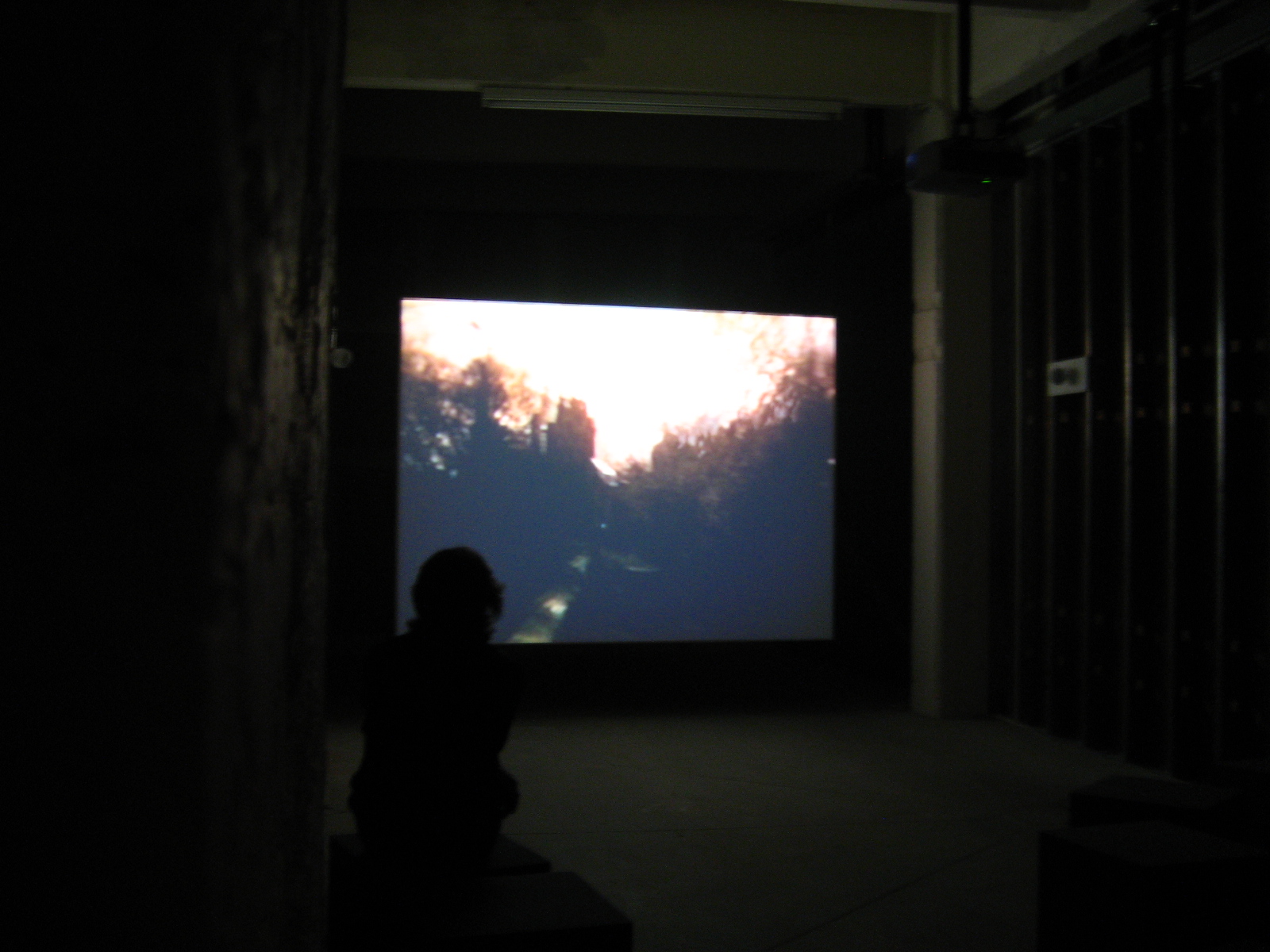
A survey of Derek Jarman's early films opened earlier this month at the Dia space on West 22nd, comprising a significant portion of programming by X, the new initiative that will activate the space with exhibitions and conversations over the next year. Spanning a massive 3 floors, the show is easily one of the most elaborate installations of moving image work I've ever seen. Although Jarman’s works were originally filmed on Super 8, and, as such, not intended to be transferred to video and then blown up, the installation, with films projected large on video in multiple, open screening spaces, brought new meaning to the original works. I should note my visit to Dia came after a rather disheartening afternoon at the Armory Show, where the pitiful few booths actually screening video choose to exhibit the works in a corner, or in one case, in a corner near the floor.
In his recent discussion with Dara Birnbaum in this month's Artforum, Cory Arcangel asks, "Is there even such a thing as a bastardized medium today?" in reference to increased methods of distribution within the larger cultural realm. (Find an online excerpt from the interview here.) One could suggest that the intimacy of super 8 is compromised in the Jarman show, and, in that, it represents a "bastardization" of the medium. But the theatrical, immersive installation still invites a contemplative engagement with the work, especially the small room and sound system built for Imagining October (1984). I would argue that the installation adds another level to Jarman's films, and in an age of "bastardized mediums" we should consider how these translations can expand a work's reception, not diminish them.
While we're on the topic of "bastardized mediums," I'd like to add that UbuWeb uploaded some of Jarman's films recently to their collection. I thought I'd share them below, for those who may be unable to visit the exhibition. But, if you're in New York, seriously, see the show.